
Food safety serves as the lifeline of any food enterprise. The locker room—acting as the critical buffer zone connecting non-clean areas to clean production zones—constitutes the primary line of defense for controlling contamination introduced by personnel and ensuring food hygiene and safety.
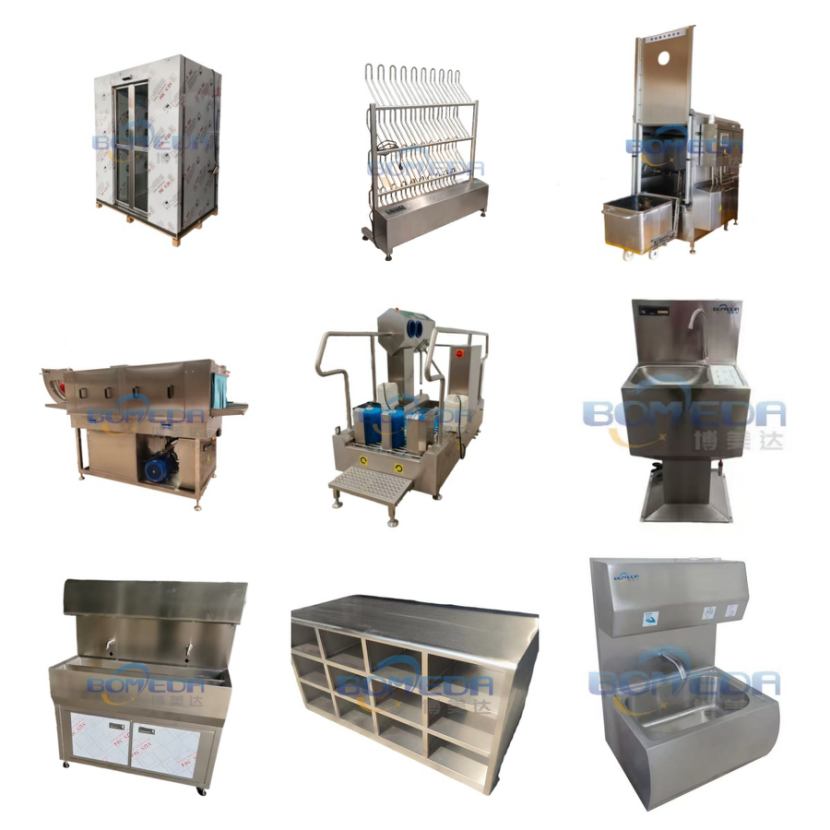
The core function of a food plant locker room is to facilitate the standardized transition of personnel from a “non-clean state” to a “clean state”; consequently, its equipment configuration directly impacts the effectiveness of contamination control within the production process. This latest upgrade strictly adheres to the core principles of “unidirectional flow, clear separation of clean and dirty zones, ease of cleaning, and compliant controllability.” It involves the scientific planning and optimization of equipment across all functional zones of the locker room, achieving a comprehensive enhancement ranging from basic infrastructure to intelligent management and control systems.
Regarding the equipment configuration within functional zones, the upgraded locker room features a clear demarcation of “dirty,” “transition,” and “clean” areas, with the equipment in each zone performing specific roles and integrating seamlessly. The First Locker Room (Dirty Zone) is equipped with moisture-proof, corrosion-resistant lockers, dedicated shoe racks, and changing benches. Each locker features a physical partition to separate personal clothing from work uniforms, while prominent warning signs—such as “Mobile phones and jewelry strictly prohibited beyond this point”—are displayed to prevent contamination risks arising from the introduction of personal items at the source. The Second Locker Room (Clean Zone) is furnished with numbered storage cabinets for clean work uniforms, full-length mirrors, and disinfecting shoe cabinets. The uniform cabinets feature a unified, vertical design—with an upper section for hanging garments and a lower section for storing shoes—to effectively prevent clean uniforms from coming into contact with the floor and becoming contaminated. The mirrors allow employees to self-inspect their attire to ensure compliance—specifically verifying that hairnets fully enclose their hair and face masks cover their nose and mouth—thereby meeting the stringent requirements for clean-room operations.
As a pivotal hub within the locker room complex, the hand-washing and sanitization zone was a key focus of this upgrade, with particular emphasis placed on enhancing both regulatory compliance and user convenience. This zone is now equipped with touch-less, sensor-activated faucets, paired with food-grade liquid soap dispensers, 75% alcohol sanitizers, and high-efficiency hand dryers—replacing traditional cloth towels that are prone to shedding lint. Additionally, illustrated instructional charts depicting the standardized “seven-step hand-washing technique” are prominently displayed to guide employees in correctly executing the hand-washing and sanitization protocols. For food production workshops with stringent cleanliness requirements, some companies have installed air showers between the secondary changing room and the production floor. By utilizing high-velocity streams of clean air, these units effectively remove dust and loose hair adhering to employees’ work uniforms. The air-showering duration is typically set to 10–15 seconds, and the doors on both sides feature an interlocking mechanism to prevent cross-contamination caused by reverse airflow.
Bomeida specializes in equipment for food plant changing rooms and cleaning facilities. Should you have any inquiries, please do not hesitate to contact us.
Post time: Apr-03-2026