
For food manufacturers aiming for consistent food safety and smooth audit passing, properly designed hygiene entrances are not optional facilities, but the first critical control point against bomeida hygiene cleaning machine Industry experts stress that overlooked entry sanitation leads to frequent non-conformities in BRC, HACCP and FDA inspections, threatening product quality and brand reputation.
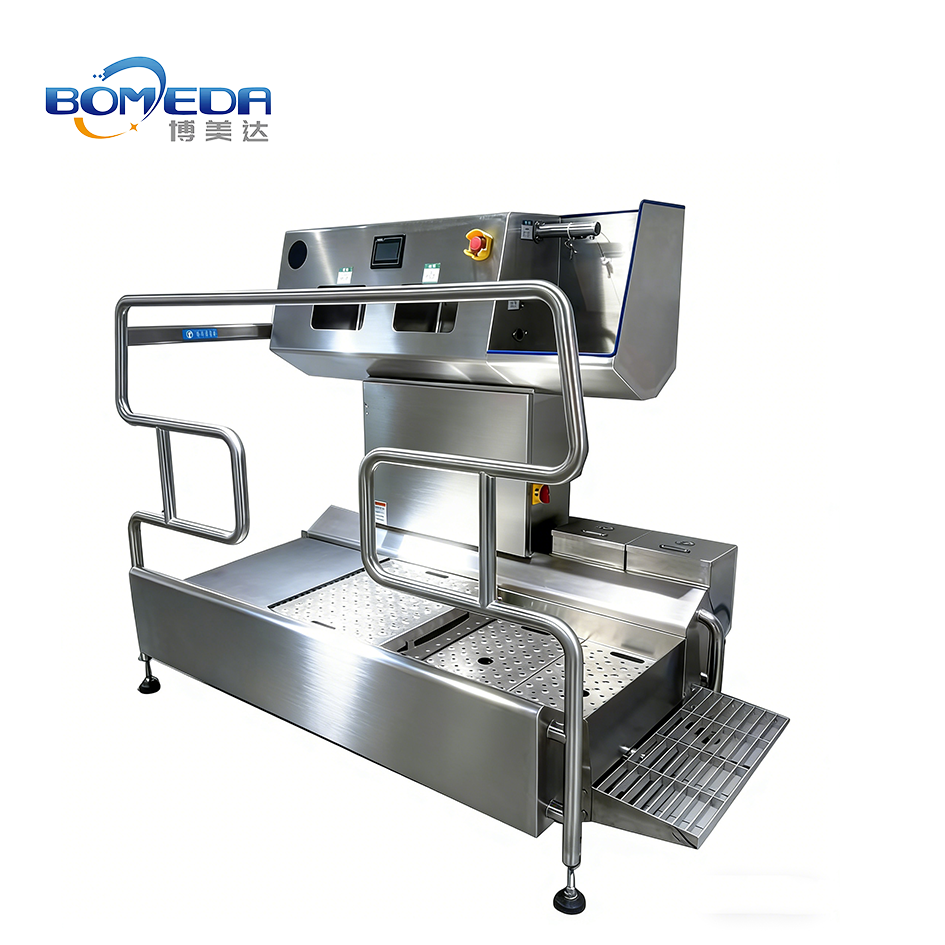
Human carriers are the top source of pathogens entering clean production zones. Street shoes, daily clothes and unwashed hands carry soil, bacteria and allergens that can contaminate raw materials and finished goods instantly. A standard hygiene entrance builds a one-way decontamination workflow: staff first change into dedicated work wear, then pass integrated stations for automatic boot washing, touch-less hand washing and sanitizing before stepping into process. Stainless steel washers with rotating brushes remove mud from boot soles, while sensor taps avoid secondary hand contact.
Well-structured entry zones also separate low-risk external areas from high-care production spaces via physical barriers and color-coded zoning. Many modern factories install interlocking turnstiles to block access until all sanitation steps are completed, eliminating careless shortcuts by workers.
Beyond compliance, reliable hygiene entrances cut recall risks and boost customer trust. Factories with complete entry sanitation systems record 70% fewer microbial exceedances in routine tests, according to food safety consultancy data. As global food standards tighten, investing in standardized hygiene entry infrastructure has become a must for sustainable food production.
Post time: Jul-10-2026